B2B vs B2C Digital Marketing: What's the Difference?
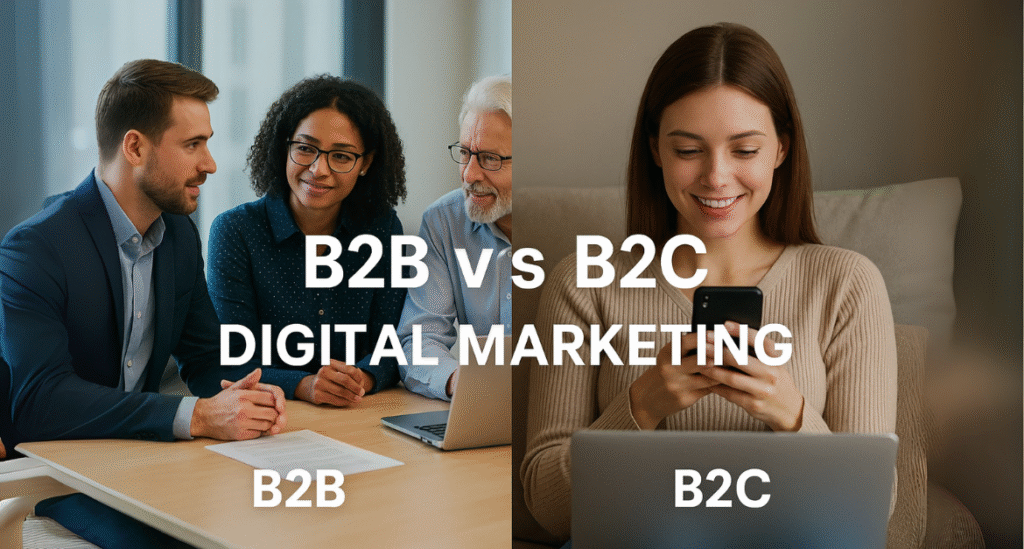
In the ever-evolving landscape of digital marketing, understanding the difference between B2B (Business-to-Business) and B2C (Business-to-Consumer) marketing strategies is crucial for brands aiming to drive results. Whether you’re targeting CEOs or Gen Z consumers, your marketing approach must align with how your audience behaves, thinks, and buys.
Let’s explore the key differences between B2B and B2C digital marketing, from buyer journeys and content strategy to lead generation and conversion optimization.
1. Target Audience and Buyer Intent
The B2B buyer is usually a professional or a group of decision-makers looking for solutions that improve business outcomes, such as efficiency, ROI, or long-term scalability. These buyers rely on logic, ROI calculations, and trust-building.
In contrast, the B2C buyer is typically an individual making quick purchase decisions, often driven by emotion, brand appeal, or instant gratification. While price and quality still matter, emotional triggers and aesthetics play a huge role in their decision-making.
2. Buyer Journey and Sales Funnel
B2B digital buyer journeys are longer and more complex. They involve multiple touchpoints, including webinars, whitepapers, LinkedIn outreach, and demo calls. On average, a B2B buyer interacts with a brand 7–12 times before making a decision.
On the other hand, B2C buyers often move through a shorter funnel. With the help of social media ads, influencer marketing, and retargeting, many consumers convert within minutes or hours of discovering a product.
Key takeaway: B2B marketing requires nurturing over time, whereas B2C thrives on speed and a seamless user experience.
3. Content Strategy
Content is king in both B2B and B2C marketing, but the tone, format, and purpose differ:
B2B Content: Focuses on in-depth, informative, and authoritative content. Think whitepapers, case studies, industry reports, blog articles, and LinkedIn thought leadership posts. These formats support B2B lead generation and educate the buyer.
B2C Content: Leans towards visually engaging, entertaining, and easily consumable formats — like Instagram Reels, TikToks, memes, influencer collaborations, and email flash sales. This content drives consumer engagement and encourages impulsive buying.

4. Metrics and Success KPIs
In B2B digital marketing, success is typically measured by:
Cost per lead (CPL)
Marketing-qualified leads (MQLs)
Sales pipeline velocity
Email open and reply rates
In B2C, marketers often focus on:
Conversion rates
Click-through rates (CTR)
Return on ad spend (ROAS)
Customer lifetime value (CLV)
Social media engagement
The B2B process is data-driven and sales-aligned, while B2C marketing is performance- and brand-driven.
5. Channels and Platforms
B2B Channels: LinkedIn, industry newsletters, Google Search Ads, webinars, Slack communities, and email campaigns.
B2C Channels: Instagram, TikTok, Facebook, YouTube, Pinterest, and influencer marketing platforms.
With the rise of AI-powered personalization and first-party data strategies, both B2B and B2C marketers are integrating automation and behavioral targeting to stay ahead.
6. Marketing Technology & Tools
Both models leverage MarTech, but their use cases vary:
B2B tools: CRM systems (like HubSpot, Salesforce), account-based marketing platforms, LinkedIn Ads, and lead scoring software.
B2C tools: Shopify, Klaviyo, Meta Ads Manager, Google Shopping, and social media scheduling tools.
AI and machine learning are enhancing predictive analytics and personalization in both sectors, but B2C uses it more for behavioral marketing, while B2B applies it to lead scoring and pipeline forecasting.
Final Thoughts
Whether you operate in a B2B or B2C market, understanding your audience is the starting point. The ultimate goal of digital marketing remains the same — to drive meaningful engagement and generate revenue. However, the approach, tone, and tactics should be uniquely crafted to resonate with your audience’s motivations and journey.
As we move into an AI-first, privacy-conscious era, data-driven strategies, personalized marketing, and omnichannel presence will define success for both B2B and B2C businesses.
At E-Shiptech, we help businesses grow through digital marketing platforms and develop a connection that lasts.